





1 Istituto ricerche solari Aldo e Cele Daccó (IRSOL), Locarno, Switzerland
2 Universitá della Svizzera Italiana (USI), Lugano, Switzerland
For about four billion years, life on Earth has relied on the laws of nature for survival on its home planet. Many organisms have also exploited astronomical phenomena associated with the Sun, Moon, and stars to optimize their search for food, shelter, mates, and other essential resources. Over time, this evolutionary process gave rise to the human species, whose struggle for survival gradually transformed into a quest for fundamental knowledge and technological innovation. Today, humanity explores an immense expanse of space-time in search for ontological answers concerning the nature and existence of the Universe, and of ourselves.
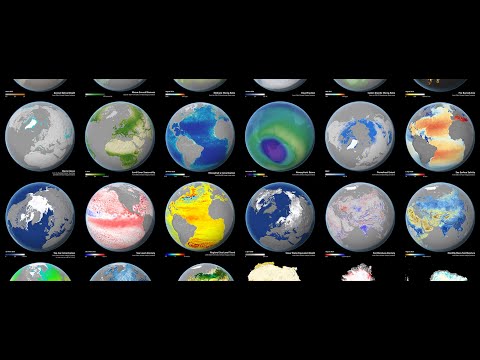
The foundation of this endeavor lies in understanding Earth, other Solar System planets, and our home star, the Sun, which altogether provide the initial framework for identifying other living worlds within our stellar neighborhood. The Sun is both the sustainer and potential destroyer of life on Earth. Its energy created and maintains our habitable environment, while its long-term evolution and variable magnetic activity continually shape space weather and at times threatens the atmosphere and biosphere. In our Solar System, life beyond Earth may exist or had existed underground on Mars, within the clouds of Venus, in the subsurface oceans of Europa and Enceladus, or even in the hydrocarbon lakes of Titan. These diverse environments suggest that life may persist under conditions very different from those on Earth.
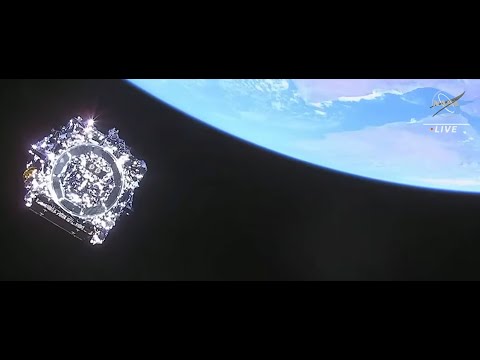
Beyond the Solar System, we have already discovered a remarkable diversity of exoplanets, and we are now developing the tools required to uncover an even greater diversity of potentially habitable environments and extraterrestrial life. Because we cannot yet send probes to other stars and their planets, we rely on remote-sensing techniques, particularly imaging, spectroscopy, and polarimetry. The combination of high-precision instrumentation and advanced computational methods (including AI) will soon enable us to obtain images of distant planets where oceans, continents, atmospheric phenomena, and perhaps even biological and technological colonies may be detected, similar to features that are visible in images of Earth taken from space. Such discoveries will open entirely new scientific frontiers: exogeology, exoecology, exobiology, and beyond.
Moreover, this pursuit may help answer some of humanity’s most fundamental questions: Where do we come from? Why are we here? What is the future of life on Earth? Nowadays, humans are steadily extending their activities into the nearby space, developing capable spacecrafts, robotic explorers, and systems for long-term survival in space. Plans for permanent settlements on the Moon and, eventually, Mars could transform humanity into a multi-planetary species and open a new chapter in our exploration of the Solar System. Ultimately, communication with extraterrestrial intelligence may become possible, an opportunity that is at once profoundly exciting and potentially dangerous. In this way, guided by the same curiosity and instinct for survival that have shaped life on Earth for billions of years, humanity will once again embark on a transformative quest for new knowledge.
Svetlana Berdyugina is an Adjunct Professor at the Faculty of Informatics at USI Università della Svizzera italiana and Director of the Istituto Ricerche Solari Aldo e Cele Daccò (IRSOL) in Locarno. Previously she held professorships at the University of Oulu (Finland) and ETH Zurich (Switzerland), and the full professorship at the University of Freiburg (Germany). Her research spans solar and stellar physics, exoplanets, astrobiology, and spectropolarimetry, with a particular focus on using polarised light to study magnetic fields and search for signs of life beyond the Earth. She also served as a member of the ISSI Scientific Committee.