
Search

International Space Science Institute (ISSI)Hallerstrasse 6
3012 Bern
Switzerland

Phone +41 31 684 48 96
Email issi@issibern.ch

Illustration of the Parker Solar Probe over the Sun (Credit: NASA/SDO/S. Gribben)

Game Changer Webinars

Abstract

The launch of Parker Solar Probe (Parker) in 2018, accompanied shortly after by the launch of Solar Orbiter (Orbiter), has opened a new frontier in the exploration of the Heliosphere.  One of the first observations by Parker Solar Probe was that much of the solar wind, independently of speed, is dominated by Alfvénic fluctuations, suggesting that these fluctuations play a vital role in Heliospheric dynamics. Parker also observed that the Heliospheric current sheet is extremely dynamic in its formation region, with reconnection being a persistently observed process.

While it has been established since the Helios epoch and confirmed by Ulysses and SOHO  that while the sources of fast solar wind streams at solar minimum are the polar coronal holes, slower solar wind streams have contributions from different sources. The larger than expected filling factor of slow solar wind has been attributed, in addition to flows surrounding the Heliospheric current sheet, to flows coming from coronal hole boundaries, i.e., regions with large expansion factors, or from regions where the mapping of the magnetic field from the photosphere into the heliosphere is complex, as identified for example by the squashing factor, and known as the S-Web. The ubiquity of Alfvénic fluctuations in the inner Heliosphere, and the frequent observation of slow Alfvénic solar wind by Parker as well as Orbiter, previously observed relatively rarely in Helios and Wind data, provide evidence for a picture of solar wind origins that incorporates both the expansion factor and S-web paradigms: both coronal holes with large expansion and S-Web regions act as slow solar wind sources, with the difference that highly expanding coronal holes provide Alfvénic slow streams, while the S-web wind is unlikely to exhibit strong Alfvénic correlations. Over the solar cycle the distribution of solar wind flows changes, and we will highlight how observations from Parker and Orbiter have opened new perspectives on how the solar magnetic field is advected into the Heliosphere.

About the Speaker

Marco Velli studied plasma physics at the University of Pisa and Scuola Normale Superiore under Profs. Bruno Coppi and Francesco Pegoraro. He subsequently held post-doctoral appointments at the University of St. Andrews and the Observatoire de Paris, Meudon, where he collaborated with A. Mangeney and R. Grappin on studies of the solar wind and its embedded turbulence. In Paris he developed the idea that reflection plays a fundamental role in driving turbulence in the solar wind, and followed that with the expanding box model allowing simulation studies of turbulence in the inhomogeneous solar wind. He was professor at the University of Firenze and Principal Scientist at the Jet Propulsion Laboratory, where as lead theorist he helped develop the Solar Probe concept presently flying as Parker Solar Probe. Since 2014 he has been Professor of Space Physics in the Earth, Planetary and Space Sciences Department at UCLA. For his research he was elected fellow of the AGU in 2014 and awarded the Parker lecture in 2022, and was Johannes Geiss fellow at ISSI in 2023.

About The Webinars

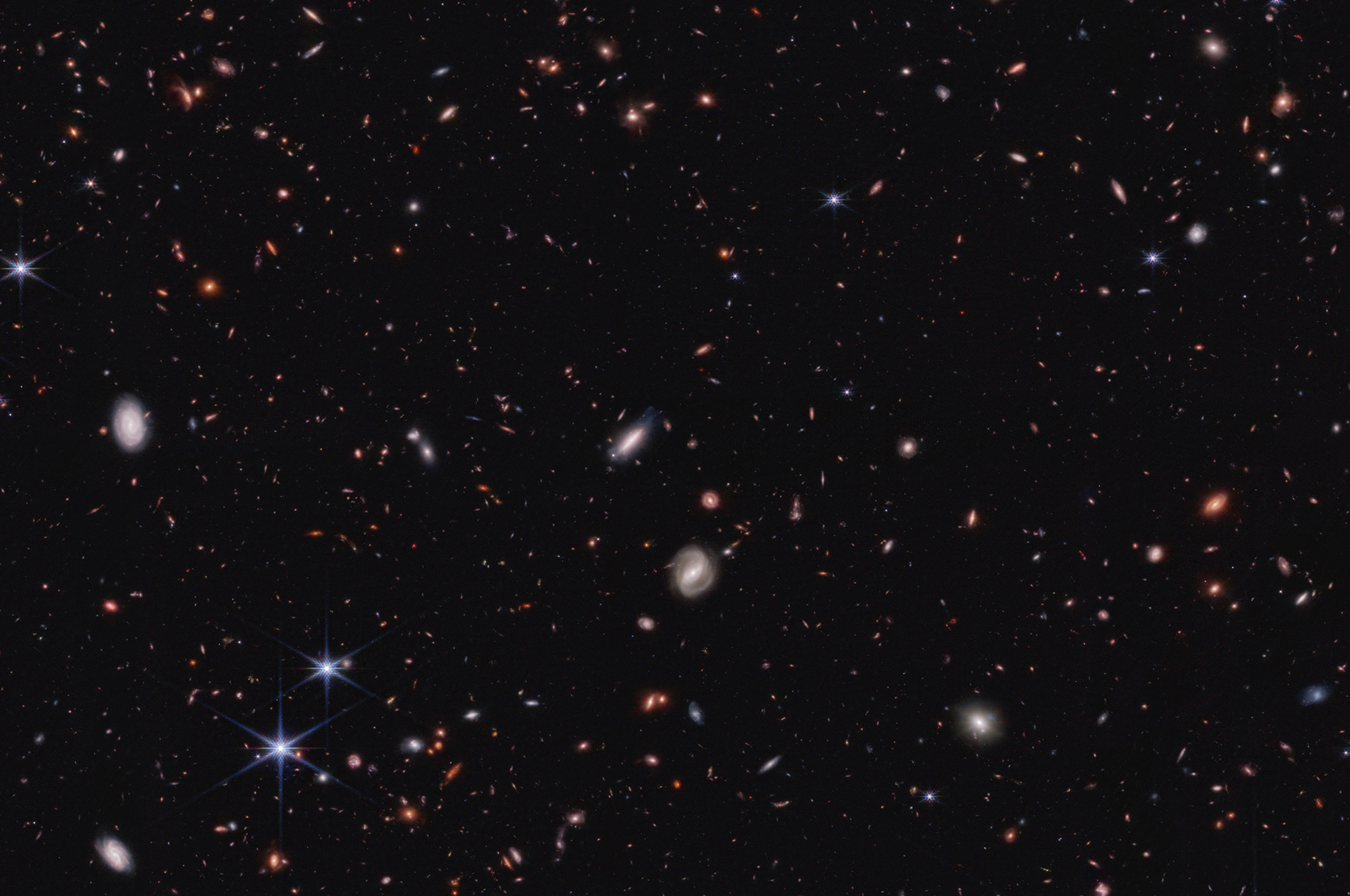
NASA, ESA, CSA, S. Finkelstein (University of Texas)