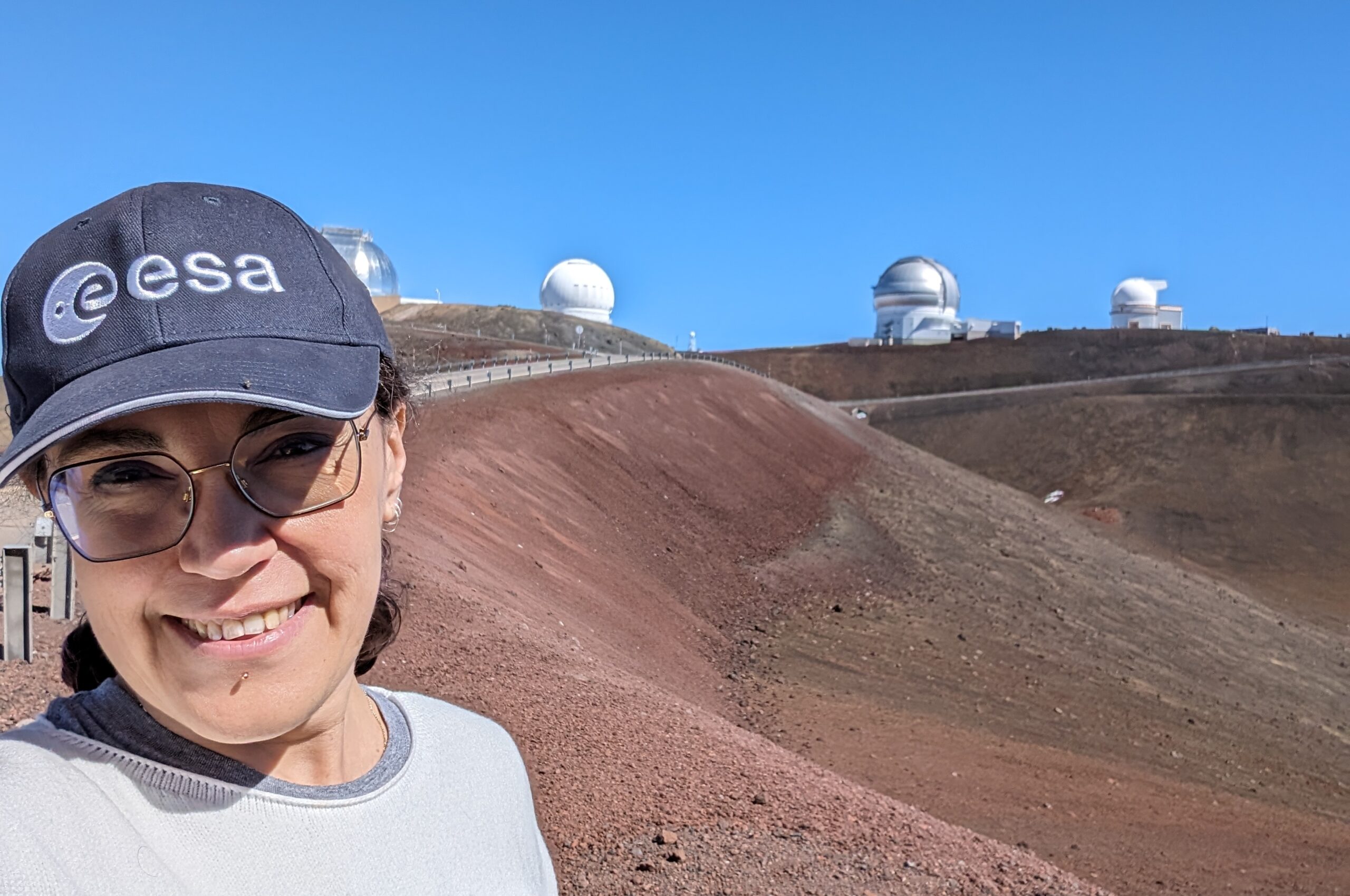
For those who have not met you yet, how would you describe your scientific background?
I’m fascinated by the lifecycle of stars and how they shape their neighbourhoods. My research focuses on how stars form and influence one another. For instance, I study how the intense radiation from massive stars can strip away the planet-forming disks of smaller, neighbouring objects. I also look at how stellar dynamics – the movement and interactions of stars – can completely alter their evolution and lead to the creation of some of the most exotic objects in our universe.
Having worked in different countries, what is something you have learned from experiencing different scientific cultures?
I have been very fortunate to work in centres frequently visited by scientists from different countries and with very diverse scientific backgrounds. Working alongside so many talented researchers has been incredibly enriching. It taught me that there is never just one way to solve a complex problem. When you bring together people with diverse academic backgrounds and cultural perspectives, it sparks a unique kind of creativity. It has made me a much more adaptable researcher and taught me the immense value of looking at astrophysical problems through multiple lenses.
Looking back, what was a key moment that influenced the direction of your career and your interest in space sciences?
Throughout my career, I’ve always been driven by a deep curiosity about how things work. Early on, that curiosity was focused on the technical side – I wanted to understand how to optimise the analysis of Hubble Space Telescope data so I could squeeze every bit of information out of it. Over time, that technical curiosity evolved into a passion for community service. I found my true calling in supporting the astronomical community and helping build the framework that allows global scientific discoveries to happen.
Is there a mission, telescope, or instrument that you are especially looking forward to?
The Hubble and James Webb Space Telescopes are currently at the centre of my research. JWST’s NIRCam and NIRSpec instruments, in particular, are incredibly powerful tools for investigating the physics that govern stellar evolution and uncovering how complex planetary systems like our own take shape. Looking ahead, I am eagerly anticipating the arrival of next-generation facilities, such as the Extremely Large Telescope on the ground and the Habitable Worlds Observatory in space. These future observatories will allow us to investigate the universe with a level of clarity and detail that is currently unimaginable.
Have you discovered a favourite place in Bern yet?
I already have a long list of places I want to visit and explore! I haven’t picked a single favourite spot just yet, but I am absolutely charmed by how close nature is to the historic Old Town, and how incredibly accessible and walkable the city is. I’m really looking forward to discovering my favourite corners of Bern over the coming months.
What makes ISSI different from other research environments you have experienced?
I’ve spent my entire career at major observatories, where the primary focus is naturally on optimising instrument performance. ISSI is completely different. Here, the focus is on distilling the data from those world-class facilities into actual scientific discoveries. ISSI fosters a unique environment centred around inquisitive dialogue, bringing diverse minds together to synthesise data and challenge ideas, creating an environment where collaborative discussion directly drives the next big breakthrough in space science.
What is a hobby or interest outside science that colleagues might be surprised to learn about?
I’ve always been drawn by art and nature, so moving to Bern is incredibly exciting for me. On one hand I can enjoy the stunning Swiss countryside, and on the other hand, being right at the heart of Europe means I can easily travel to explore different cultural capitals and museums. It really offers the best of both worlds.