




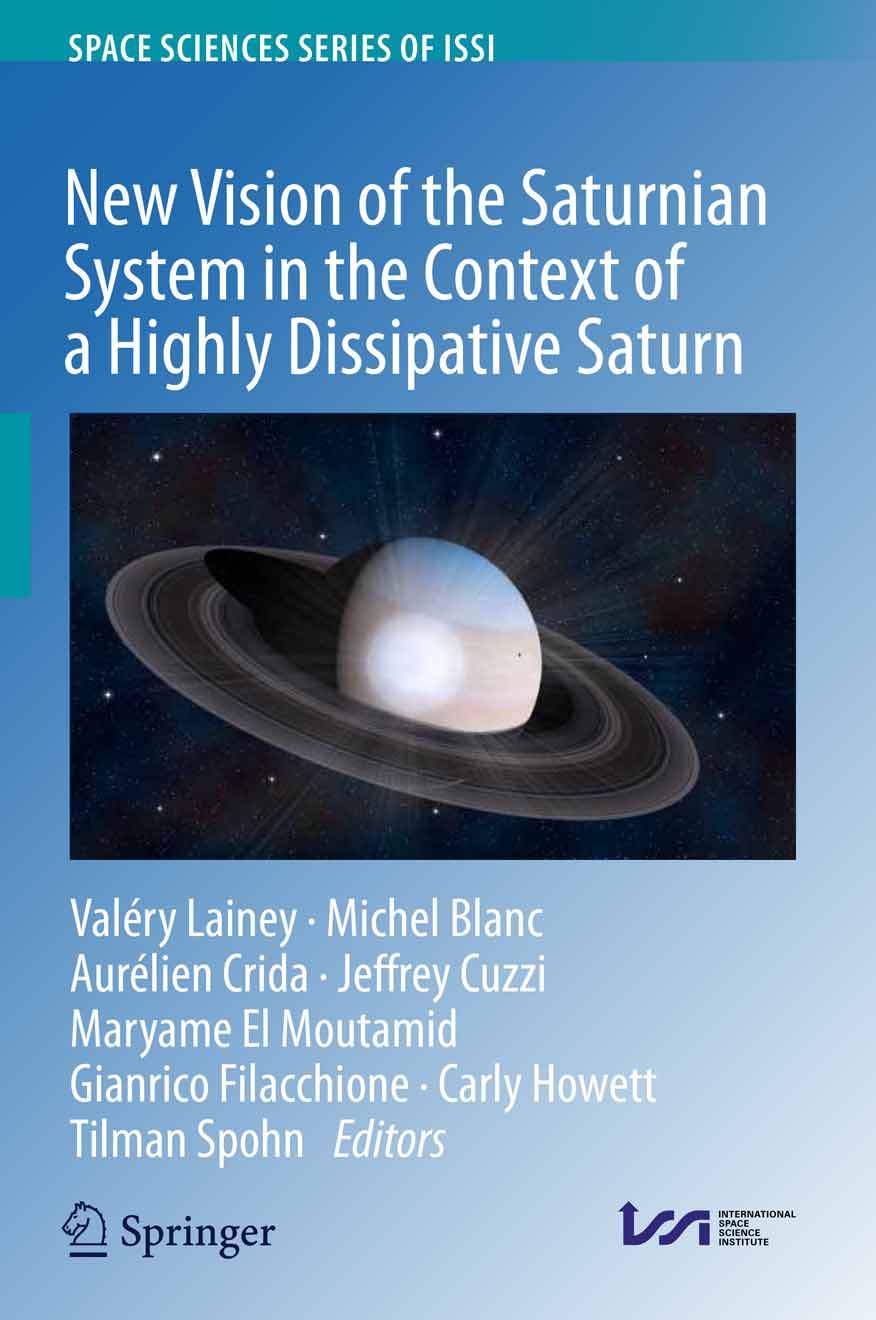
This volume collects a set of contributions that reflect the profound transformation in our understanding of Saturn and its system of rings and moons. Once considered a relatively stable and slowly evolving system, it is now recognized as highly dynamic, shaped by unexpectedly strong tidal dissipation within the planet. This has major implications for the orbital evolution of its satellites, suggesting rapid outward migration and challenging long-standing views on the age and origin of both moons and rings. Central to these advances is the wealth of data returned by the Cassini mission, whose long-term observations, combined with significant progress in theoretical modeling, have reshaped our picture of the coupled evolution of Saturn, its interior, its rings, and its satellites.
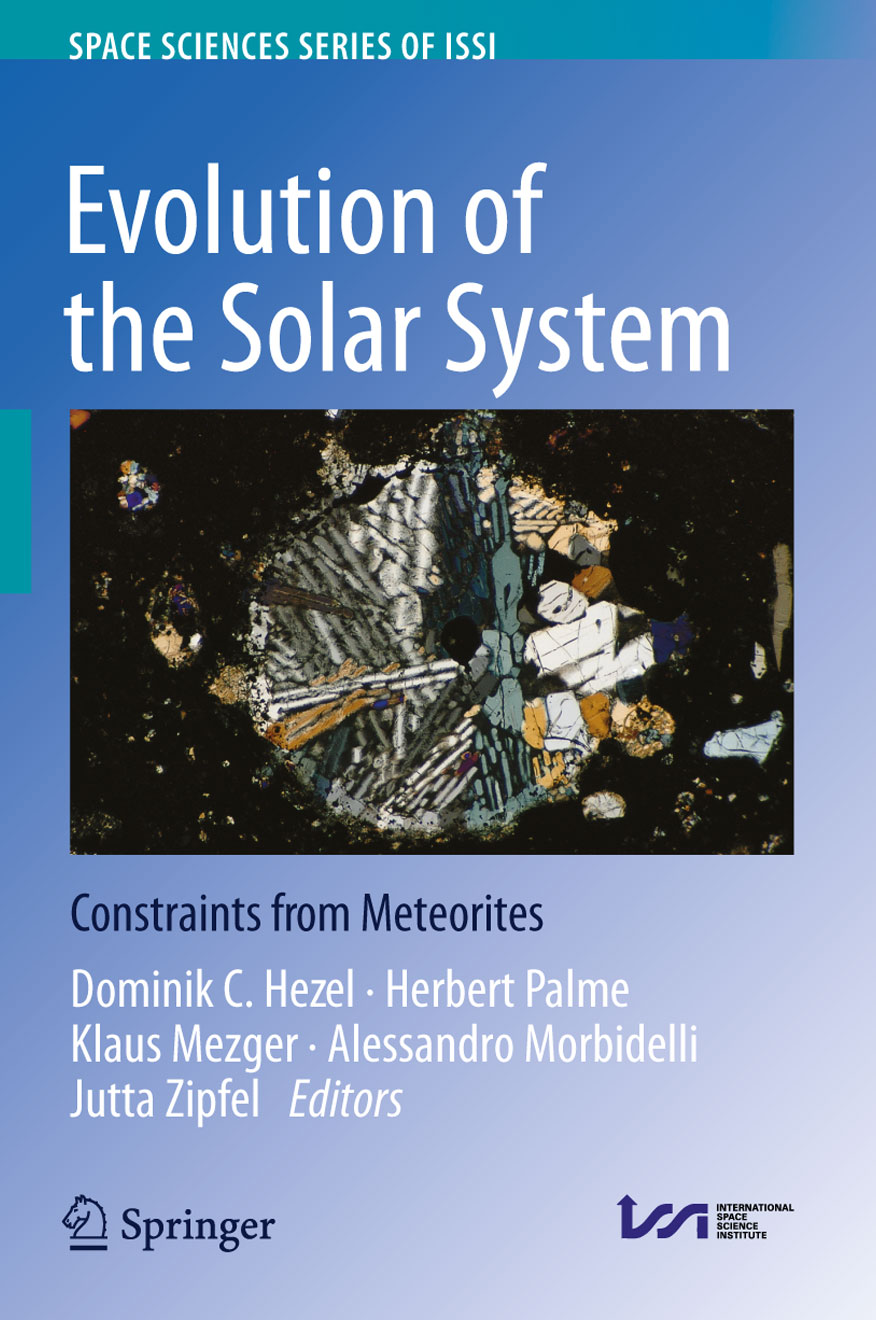
This essential collection provides a comprehensive overview of our current understanding of how planetary systems form, and in particular how our solar system formed. Our knowledge about solar system evolution is based on a broad foundation of chemical and isotope data from meteorites and their components such as Ca,Al-rich inclusions, chondrules, matrix, and presolar grains, as well as from astromaterials of sample return missions, and modelling accretion processes. The chapters in this volume present the latest data and modelling results from cosmochemistry and astrophysics, and discuss their implications for early solar system evolution from the earliest solids formed in the protoplanetary disk, all the way to accretion and differentiation of planetesimals and planet formation. The importance of past, current, and future space missions is highlighted in this context.
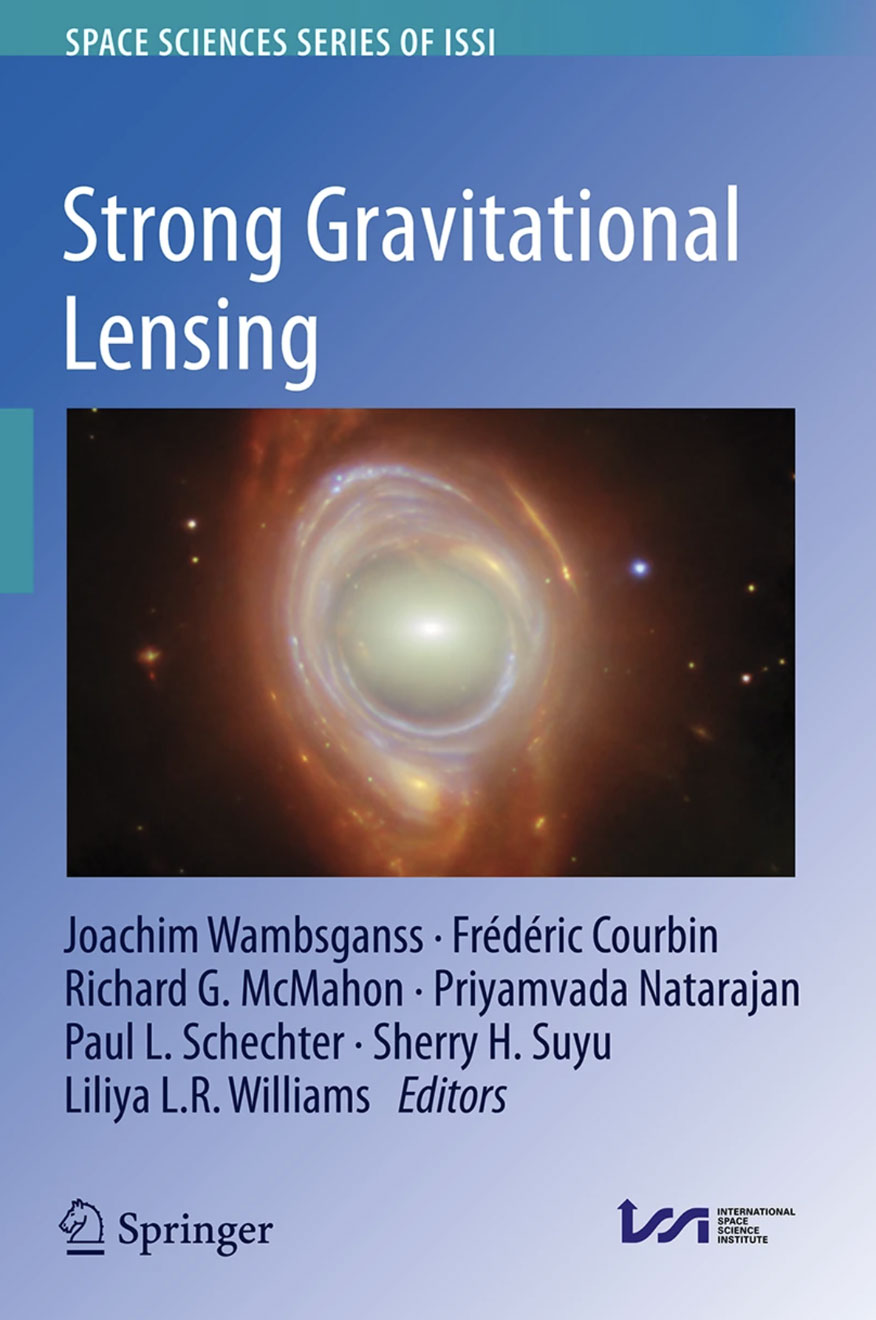
This volume contains up-to-date review articles on all important aspects of strong gravitational lensing, written by the top experts in the field. The chapters cover themes like the search for strong lenses, lensing as a probe for dark matter, lensing and microlensing of supernovae, to name just a few. The topical reviews are framed by two complementary introductory articles on “Essentials” and “Basic Elements”, respectively, of strong gravitational lensing.
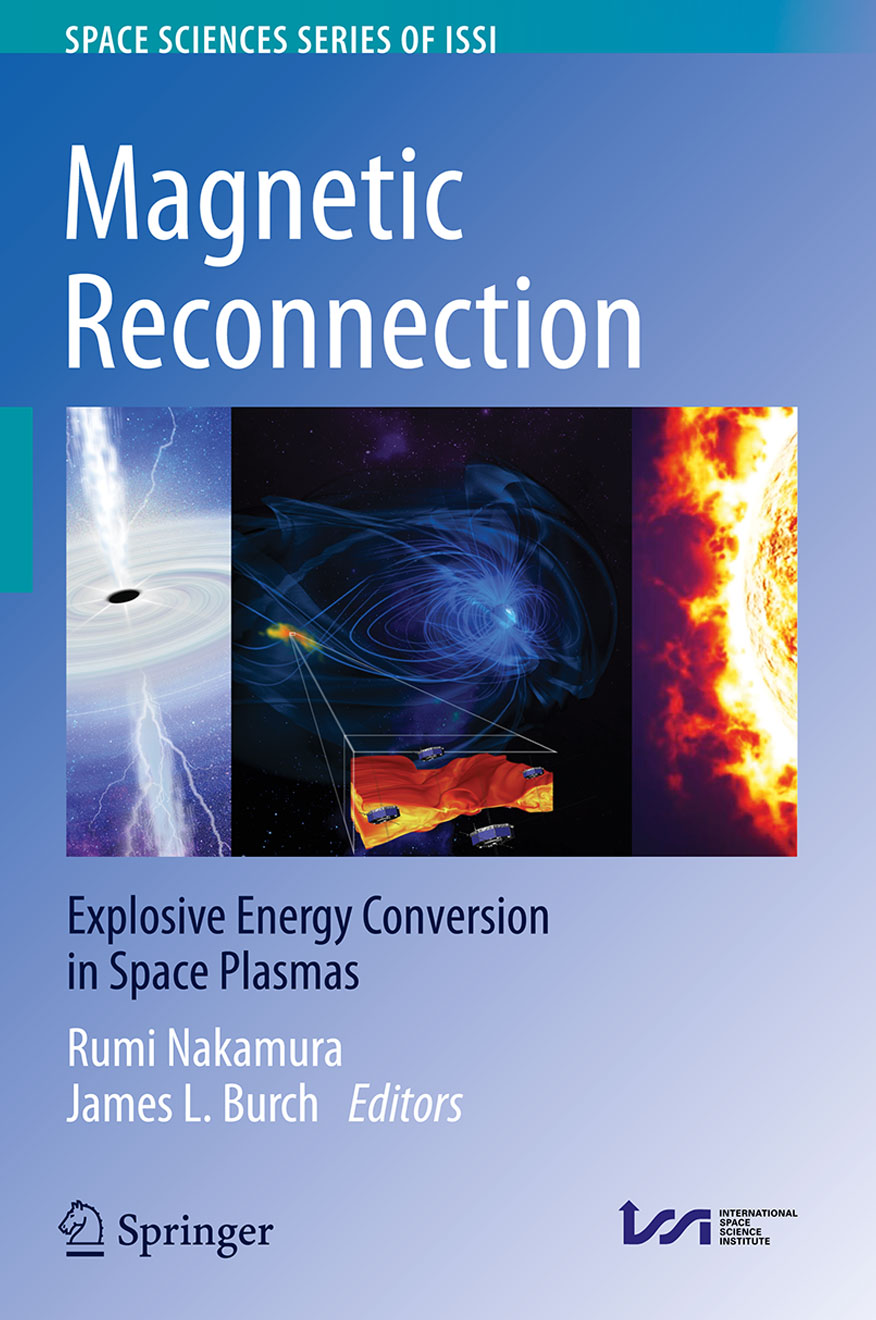
This volume presents results from the Workshop "Magnetic Reconnection: Explosive Energy Conversion in Space Plasmas", held 27 June–1 July 2022, which aims to review progress in research of magnetic reconnection and relevant processes in space plasma, based on recent in-situ multipoint observations and theoretical simulations, and to discuss its astrophysical context.
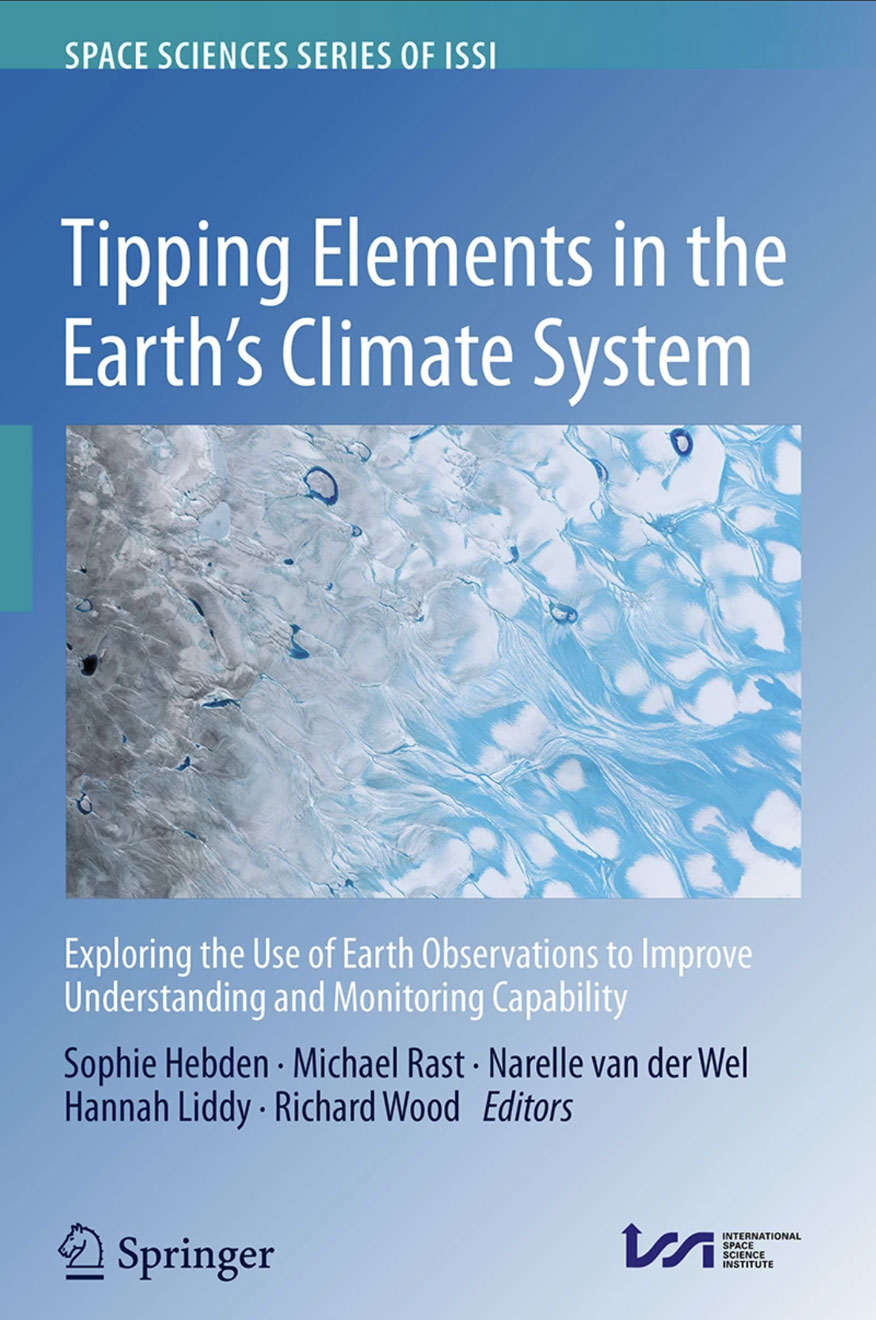
This volume addresses the growing scientific concern surrounding climate tipping points—abrupt and potentially irreversible shifts in the Earth system that may occur even under moderate global warming. It explores key examples, including the melting of the Greenland and West Antarctic ice sheets, disruption of the Atlantic Meridional Overturning Circulation, and greenhouse gas release from thawing permafrost. Over the past three decades, Earth observation satellites have become vital for detecting and tracking such changes by measuring essential climate variables. The volume presents current perspectives on how satellite data can advance the science of tipping points and support efforts to assess and manage associated risks.
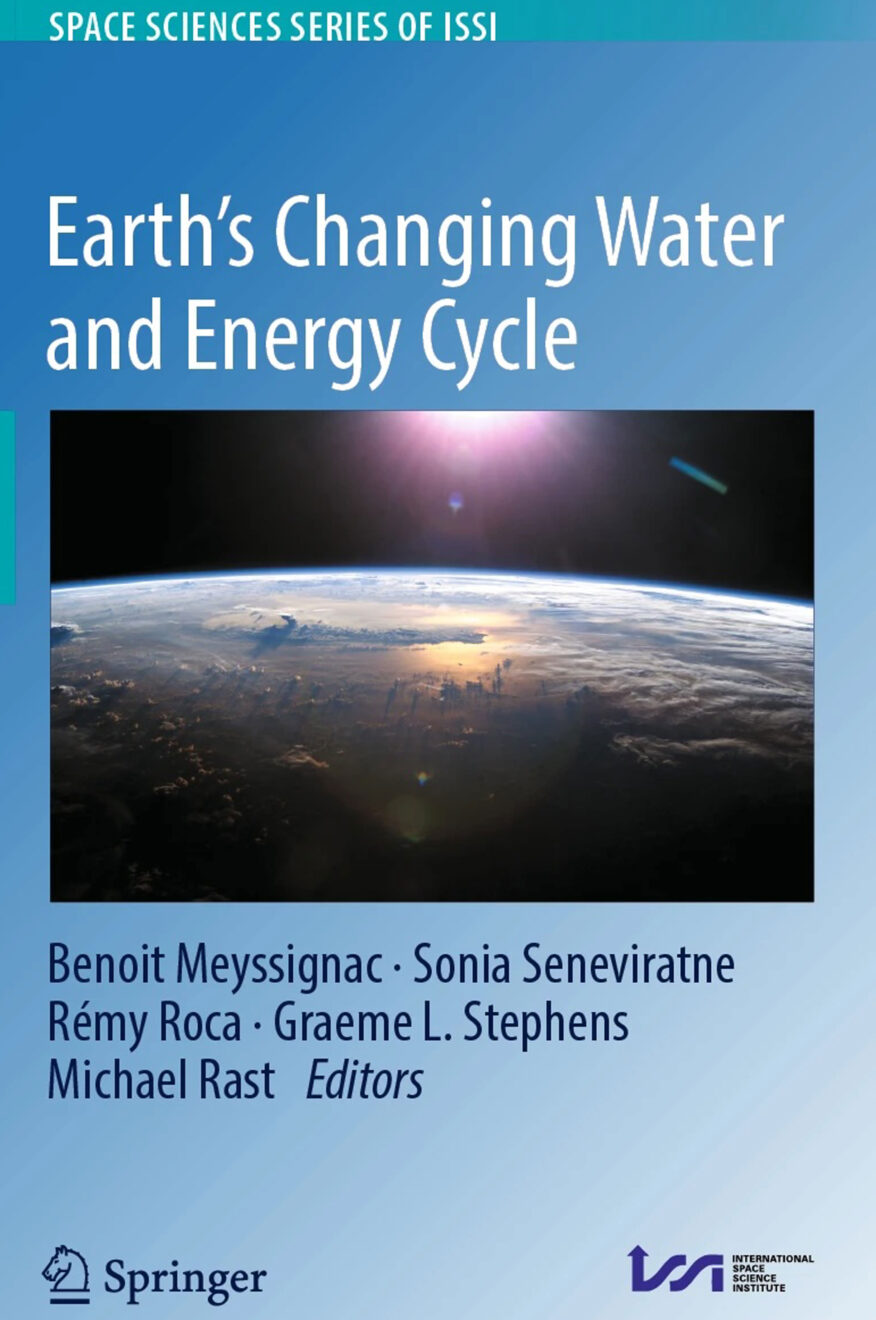
This volume offers a thorough exploration of the observation of Earth's water–energy cycle, a foundational aspect of climate science. It features a collection of up-to-date articles that provide insights into current estimates of the Earth’s water and energy fluxes, based on satellite observations, atmosphere–ocean reanalyses, and global coupled atmosphere–ocean model simulations. The book deepens our understanding of the role of clouds in the energy cycle, focusing particularly on tropical clouds and their responses to surface warming patterns, which influence global warming. It also examines the connection between tropical clouds and deep convection in the tropics. Furthermore, the volume identifies key priorities for developing an integrated and optimized observation system for Earth's water–energy cycle. It highlights the challenges currently faced in monitoring and modeling this cycle to improve predictions on annual to multi-decadal timescales.
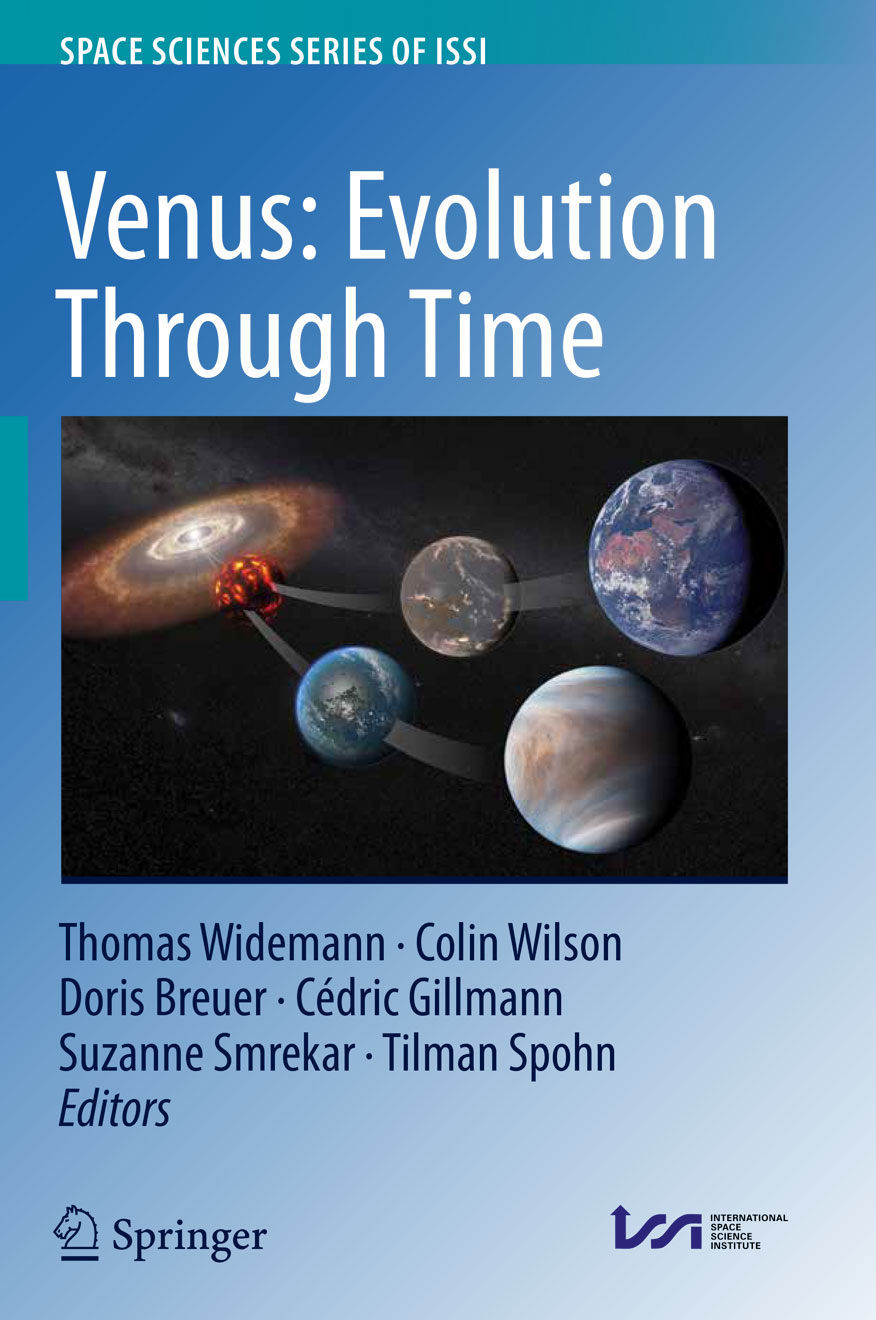
Venus is a scientifically rich target for exploration.The evolution of Venus is, at present, poorly known, despite it being our closest planetary neighbor. This book reviews current knowledge of how Venus formed, evolved, and reached its current state. It is not clear how its tectonic and volcanic activity has varied through history, nor whether it once had a habitable phase with liquid water on its surface. Science questions addressed in the book span interior processes, surface geology, the atmosphere, climate, evidence for current activity, and the potential for past habitability.
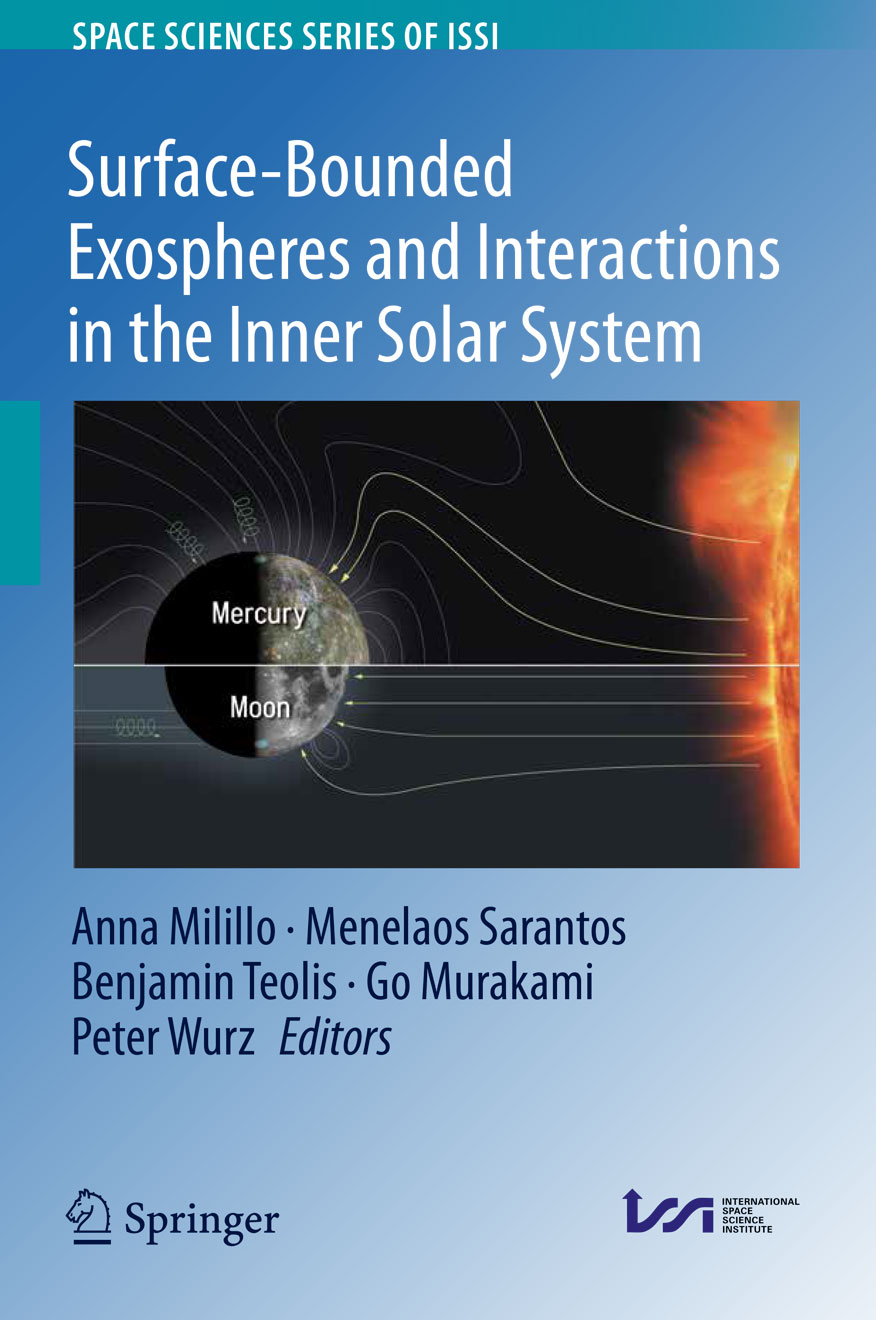
This collection presents results from the ISSI Workshop "Surface Bounded Exospheres and Interactions in the Solar System" which reviewed the knowledge on the surface-bounded exosphere conditions, generation, variability and loss processes, from theoretical, observational and experimental points of view. The output collects the present state of knowledge on this subject and drafts a roadmap for future investigations in view of the next missions, i.e., BepiColombo to Mercury or orbiters and landers to be operated on the Moon.
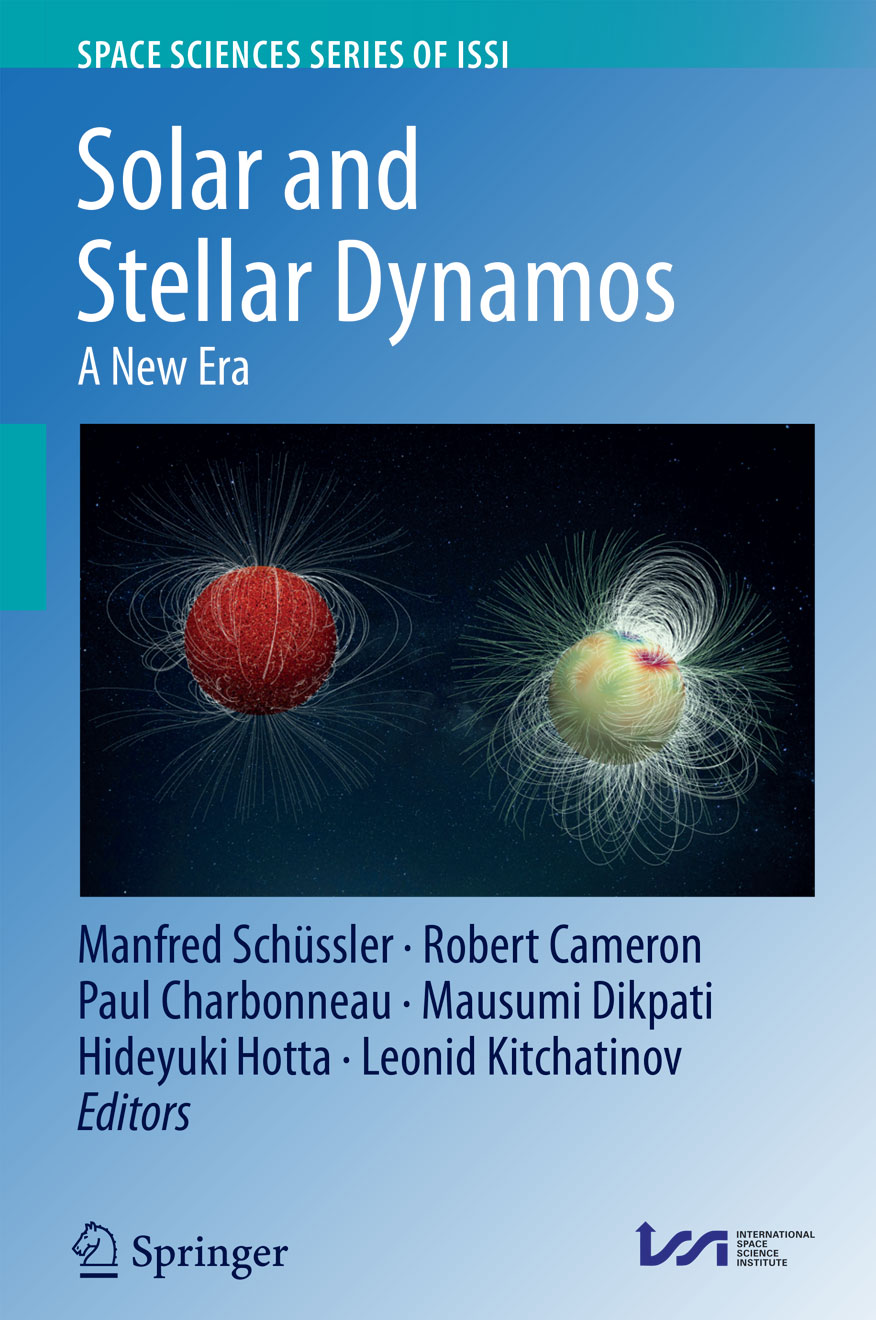
This collection presents results from the ISSI Workshop "Solar and Stellar Dynamos: a New Era", held 13–17 June 2022, which aimed to take stock of the considerable progress in our understanding of many aspects of solar and stellar dynamos that has been made during the last decade. This became possible thanks to a wealth of observations from the ground and from space, the study of simplified models, and a new generation of comprehensive 3D MHD simulations.
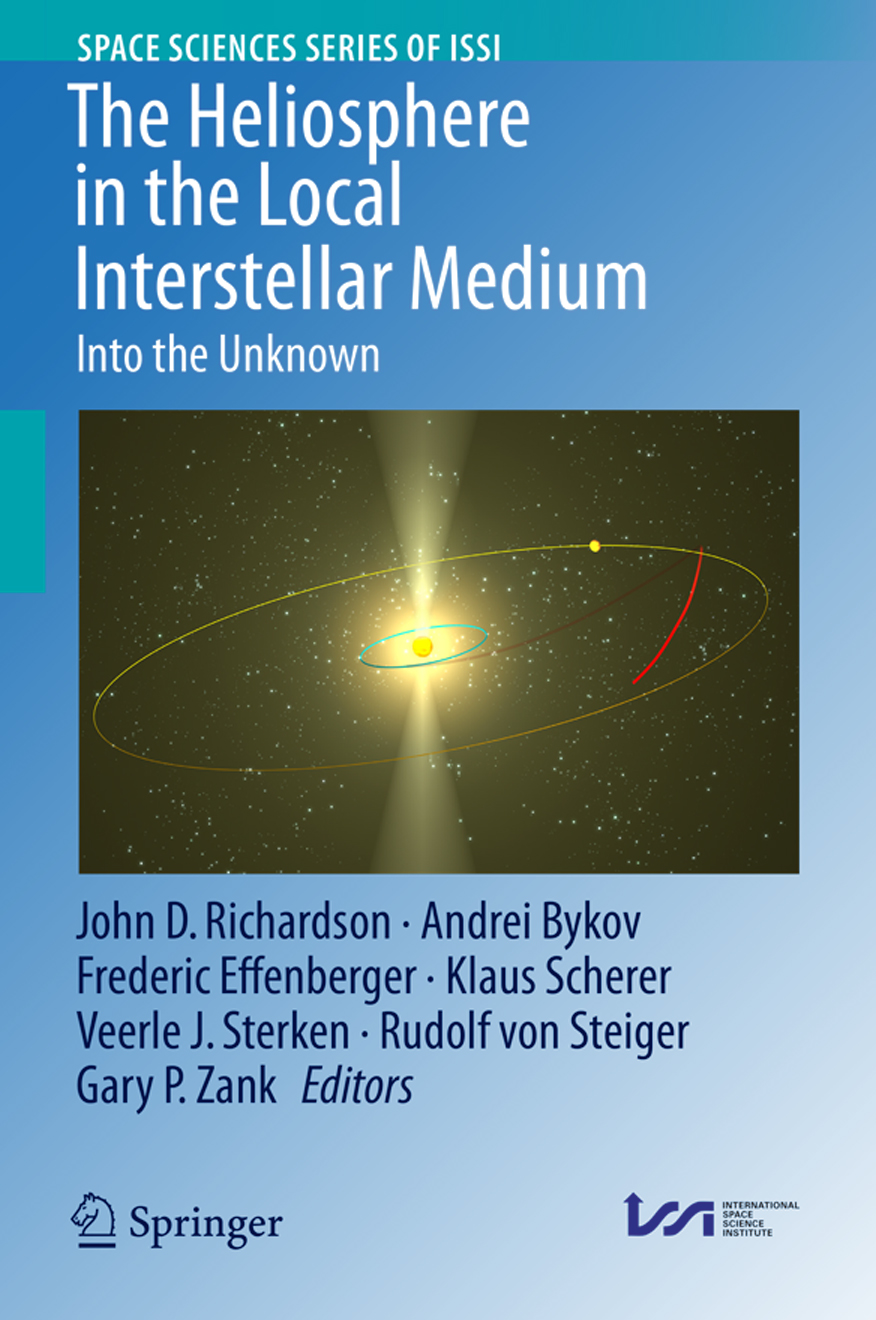
"The Heliosphere in the Local Interstellar Medium", the Proceedings of the First ISSI Workshop 6-10 November 1995, Bern, Switzerland, edited by R. von Steiger, R. Lallement, and M.A. Lee and published in 1996, was the first International Space Science Institute (ISSI) book in the Space Sciences Series. This book covers the knowledge gained in the subsequent 27 years that revolutionized our understanding of the interaction of the heliosphere with the very local interstellar medium (VLISM). Entirely new regions of space have been explored! The Voyagers both crossed the termination shock, passed through the heliosheath, crossed the heliopause, and entered the interstellar medium. New Horizons was launched with more modern instrumentation and explores low-latitude regions of the outer heliosphere. Energetic neutral atoms observed by IBEX and CASSINI allowed exploration of the heliosphere over the whole sky. The initial reconnaissance of the heliosphere and VLISM is complete with in situ measurements, observations of energetic neutral atoms (ENAs), neutral VLISM H and He, UV emissions, and interstellar dust.