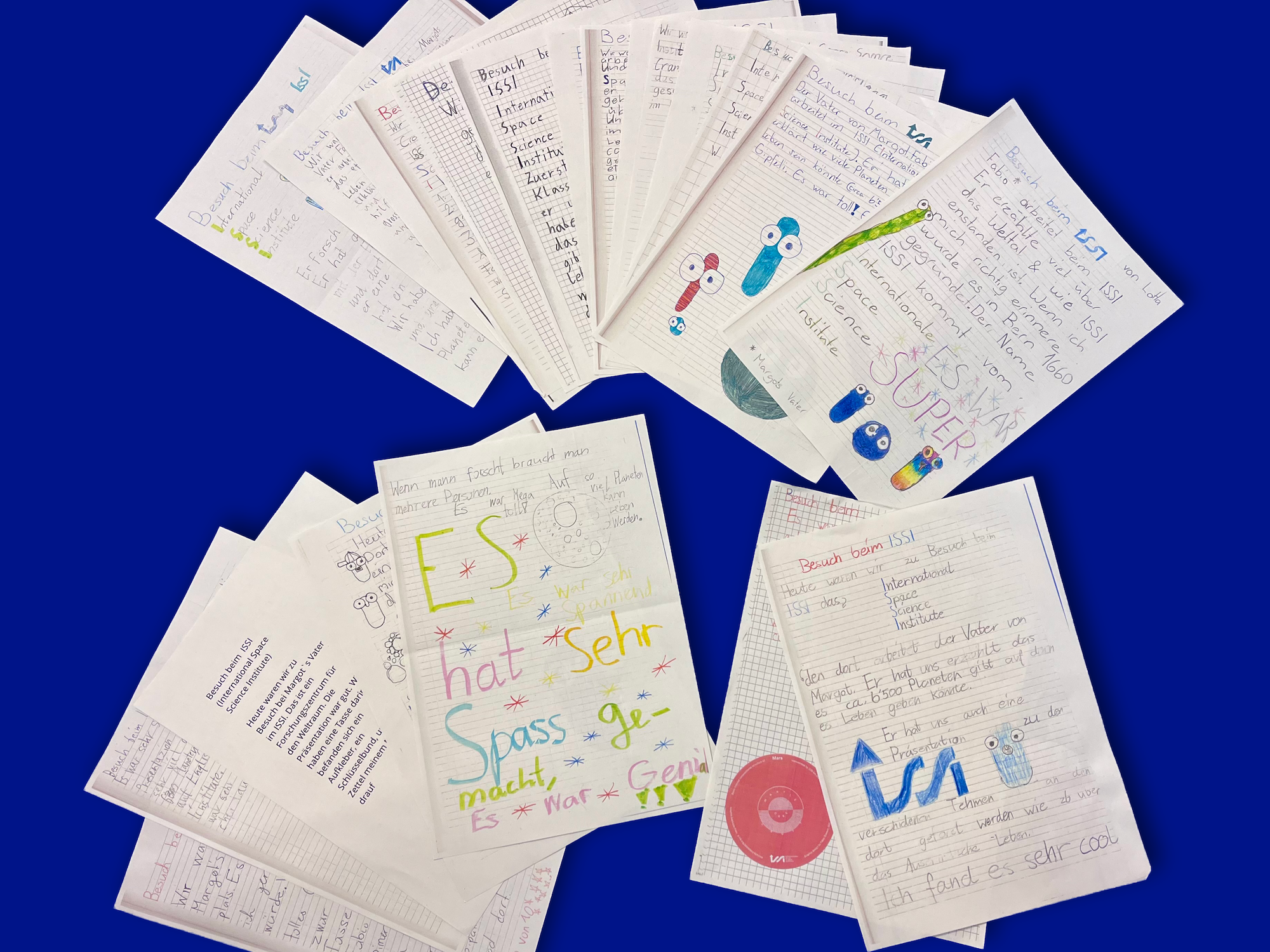
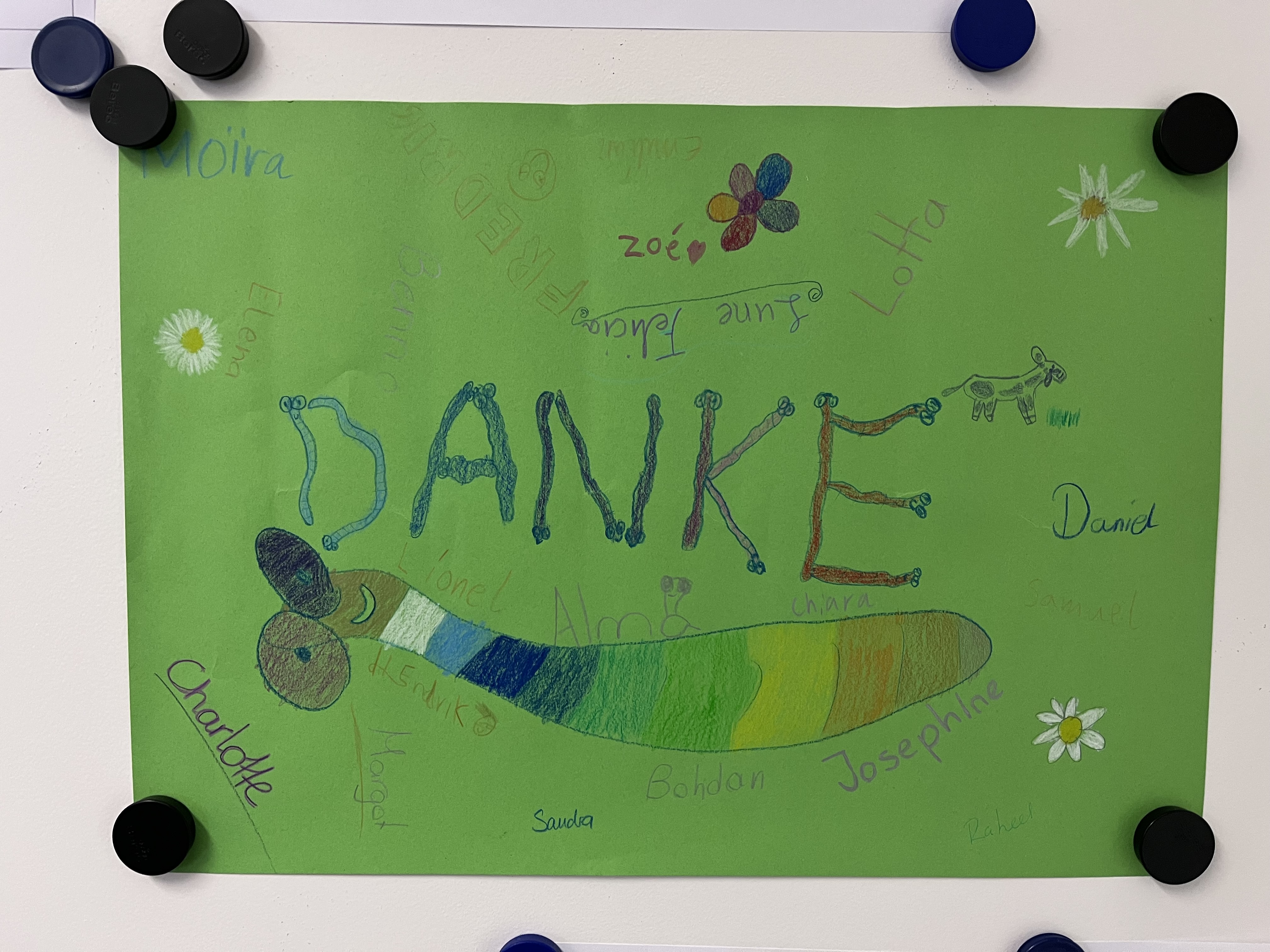
“Today, we were at ISSI. That is a research institute for space.”
“ISSI in English means International Space Science Institute.”
“At ISSI, they study galaxies, planets, and the Moon, but they can do that only with the help of satellites.”
Of course, not only with satellites, but the core idea got stuck right there.
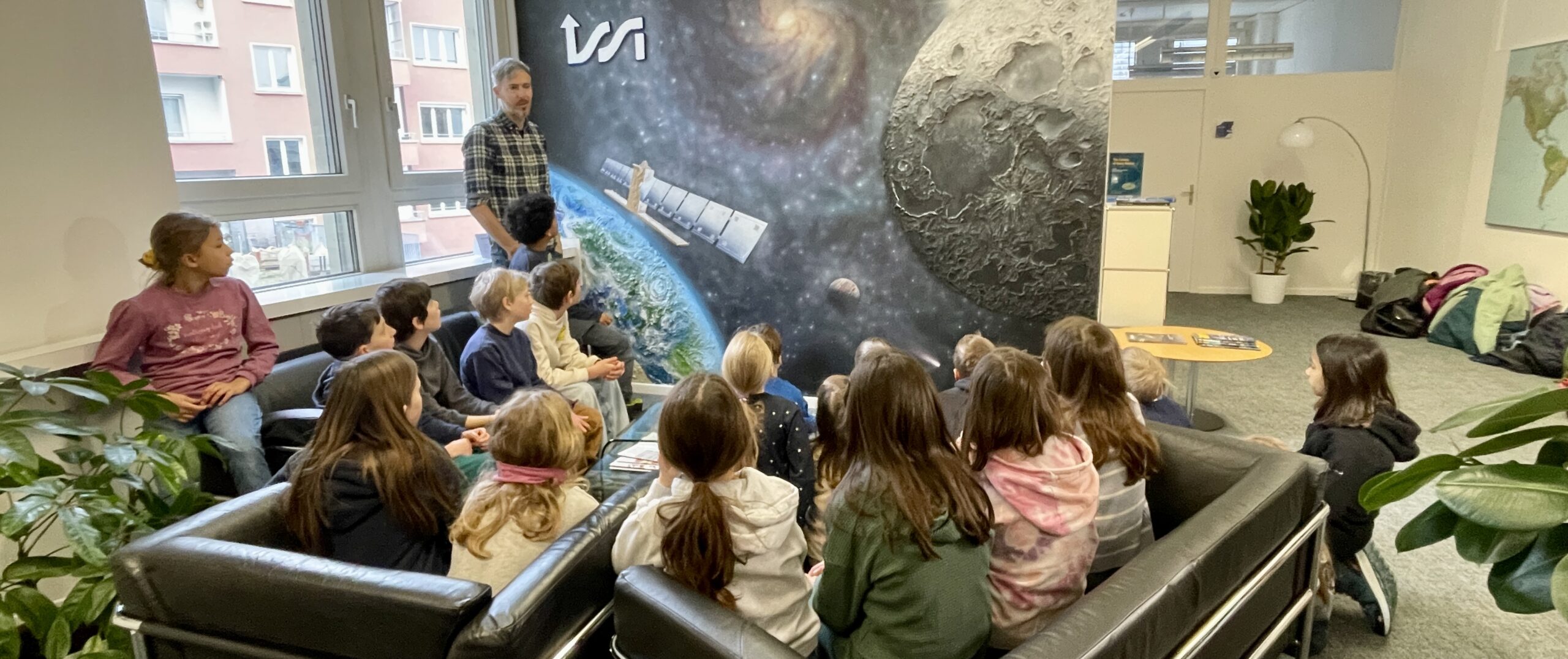
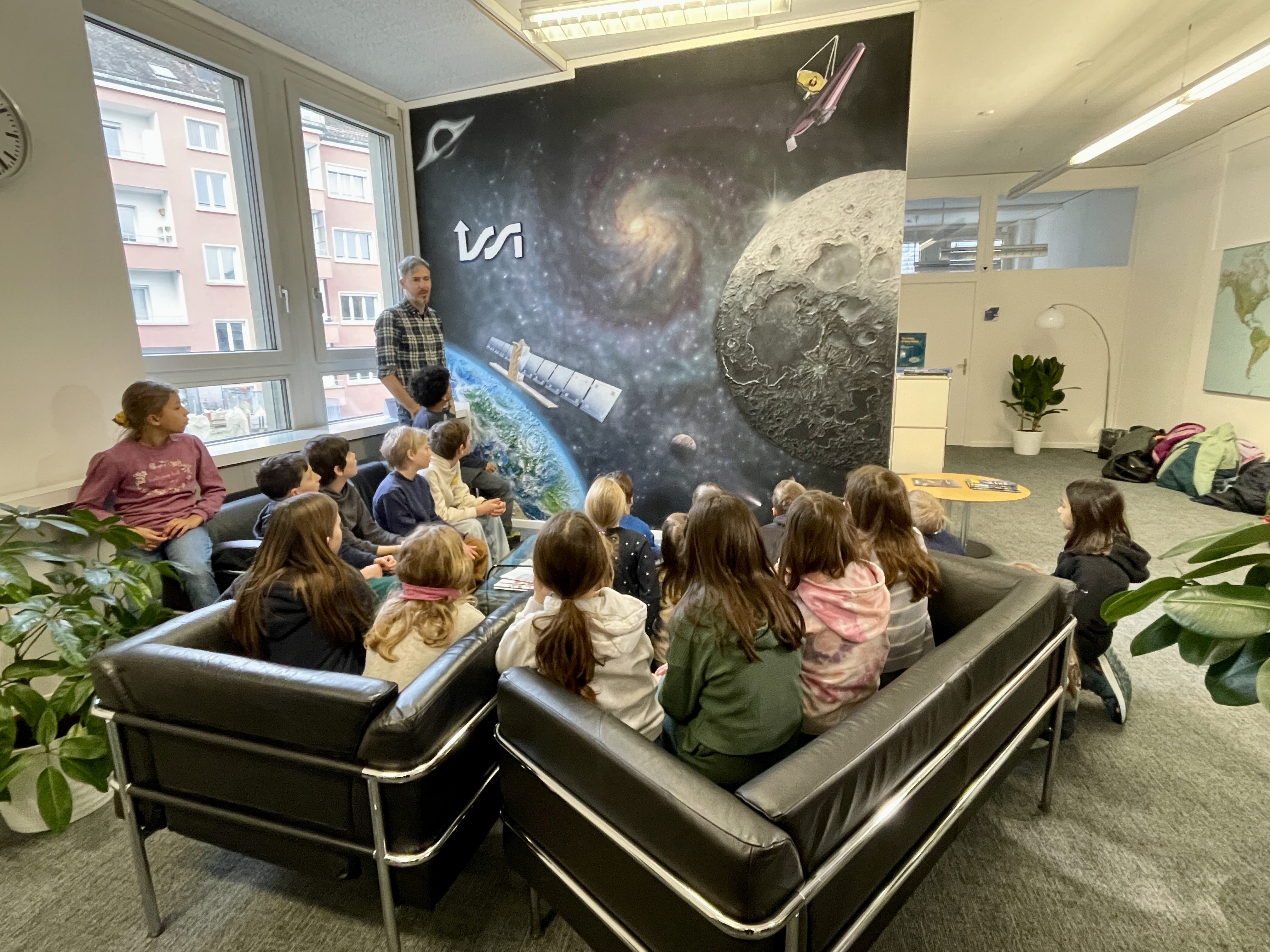
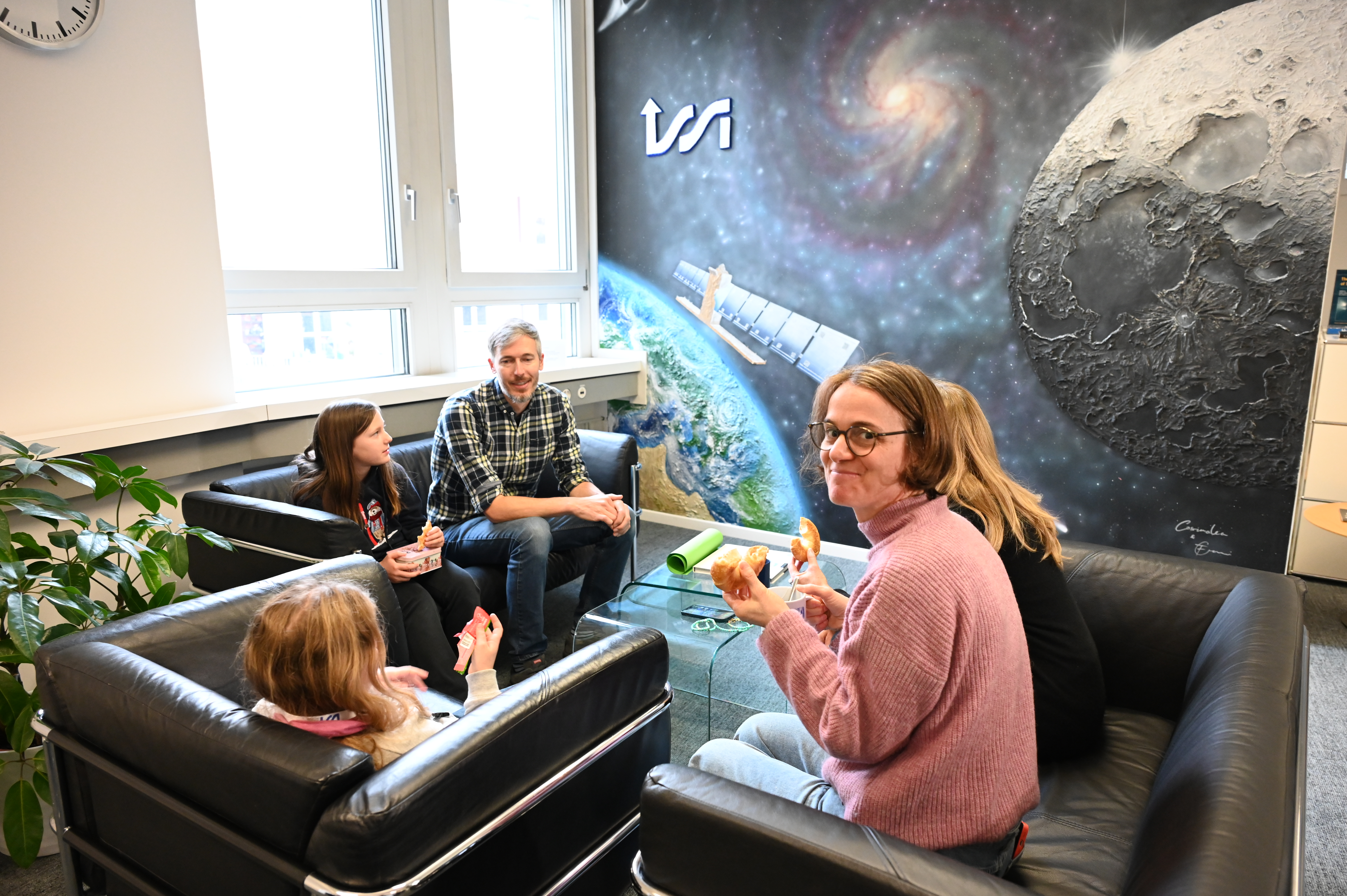
“Fabio studies the universe. He did also make a painting with his friend with the Earth, Moon, Galaxy, Satellites, and where there is Switzerland, they painted a cow.”
Fabio does not, strictly speaking, study the entire universe; only parts of it. But the cow is an excellent hook to draw anyone into learning about space science.
“I learned that a guy threw a car into the universe.”
Again, here it is the car that acts as a great hook to pull the audience in.
“It was extremely exciting. We learned that there could be life on many more stone planets.”
Once again, alien life proves to be a powerful hook, and served here as a great entry point for explaining the difference between stone (i.e. silicate) planets and other types.
“We were told how many planets there are on which there could be life (ca. 6500)”
This highlights something that is often overlooked: communicating what we do not yet know is just as important as sharing what we do. In this case, the distinction between known exoplanets and the potentially much larger number beyond our current observations.
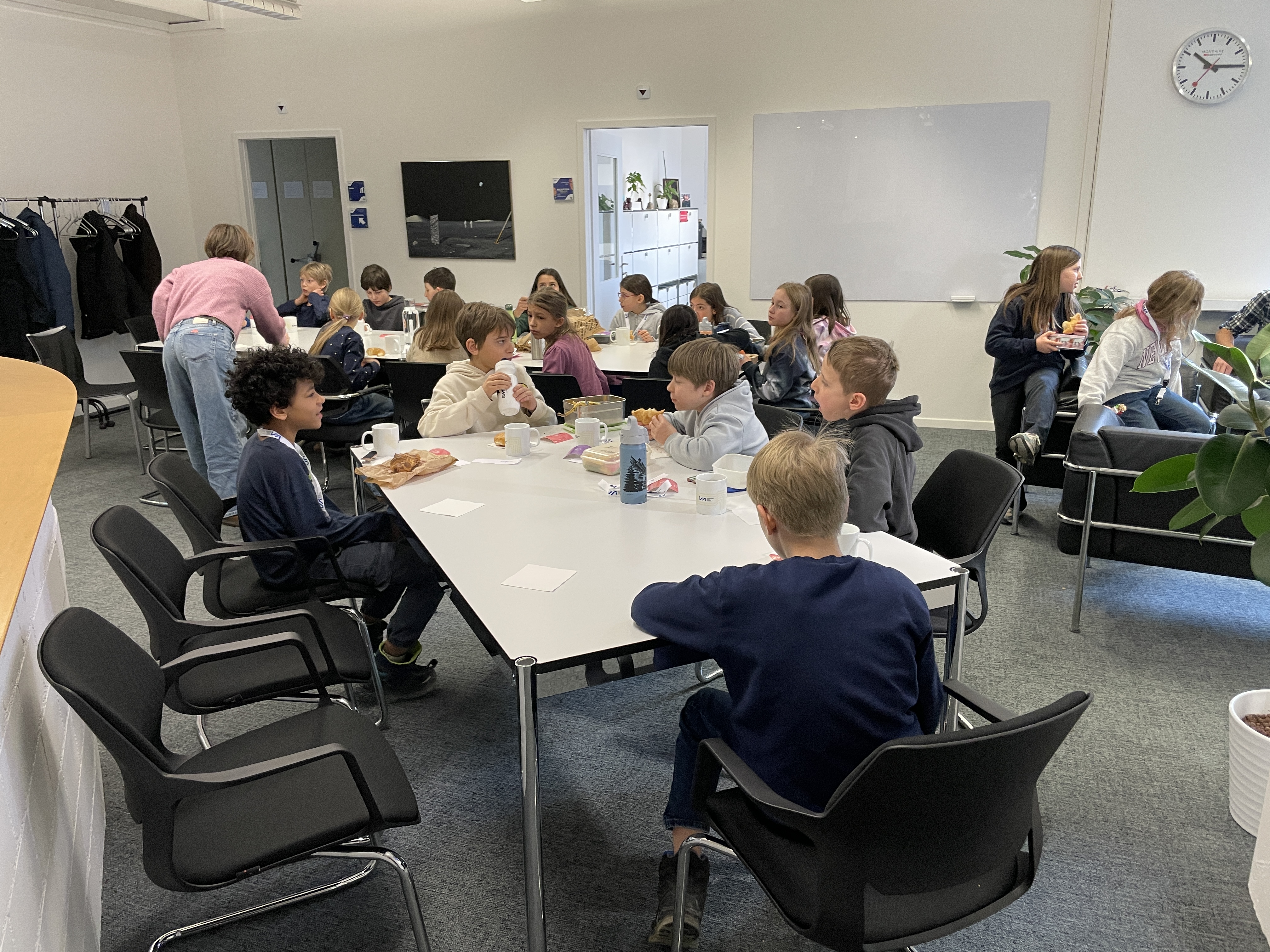
“When we went there [to ISSI], we (1) went by foot to the tram stop, (2) took the tram to Hirschengraben, (3) went again by foot to ISSI. When we went back, we took the tram again. Sad it is already finished. :-(“
Not everyone is primarily interested in space science or what lies beyond their immediate surroundings — and that, too, is perfectly fine.
“Fabio told us a lot about space and how ISSI originated. If I remember correctly, it was established in Bern in 1660.”
Bare numbers are easily mixed up. Giving ranges, comparisons, or links to well-known historical moments is often more effective than precise dates.
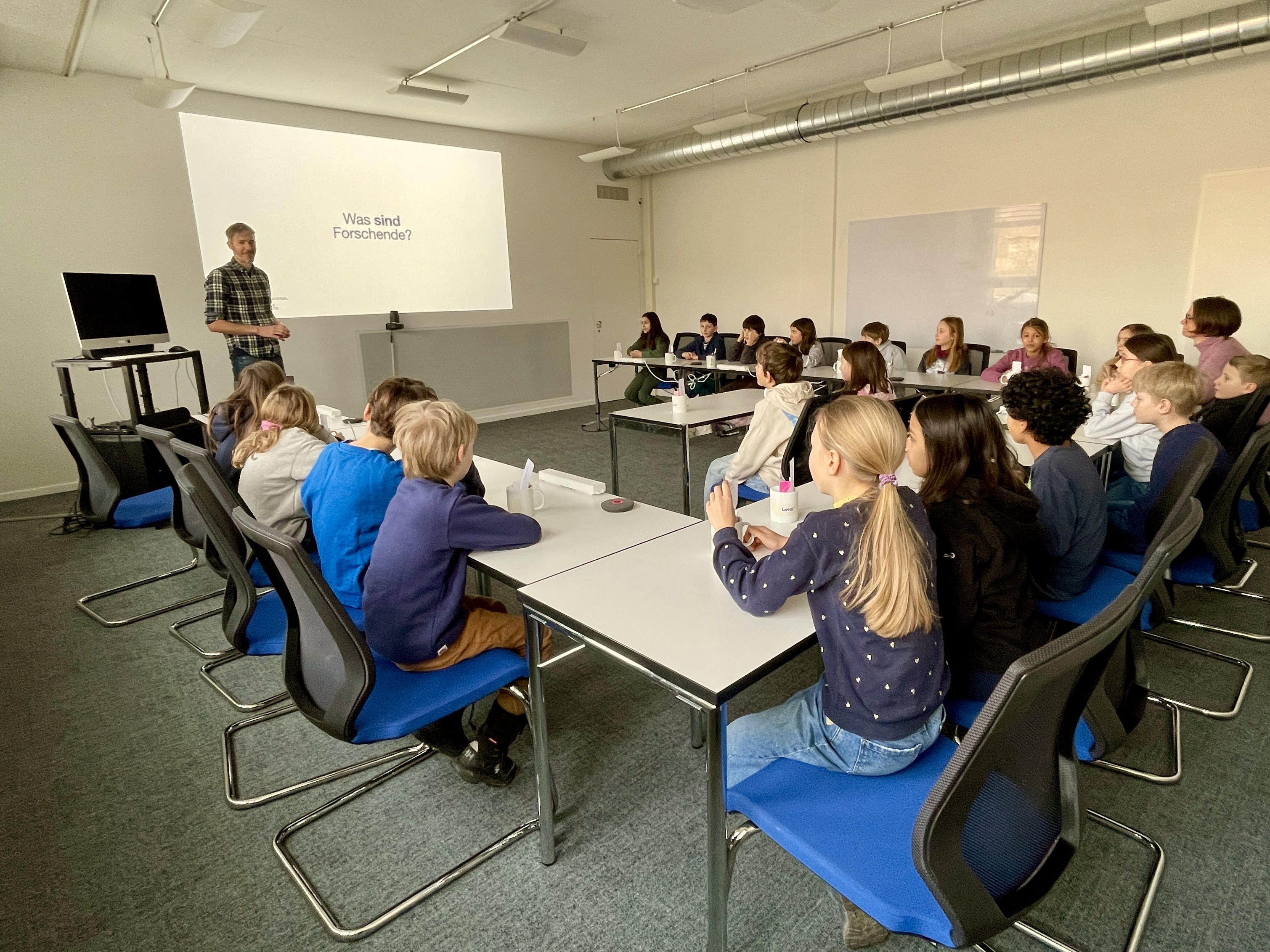
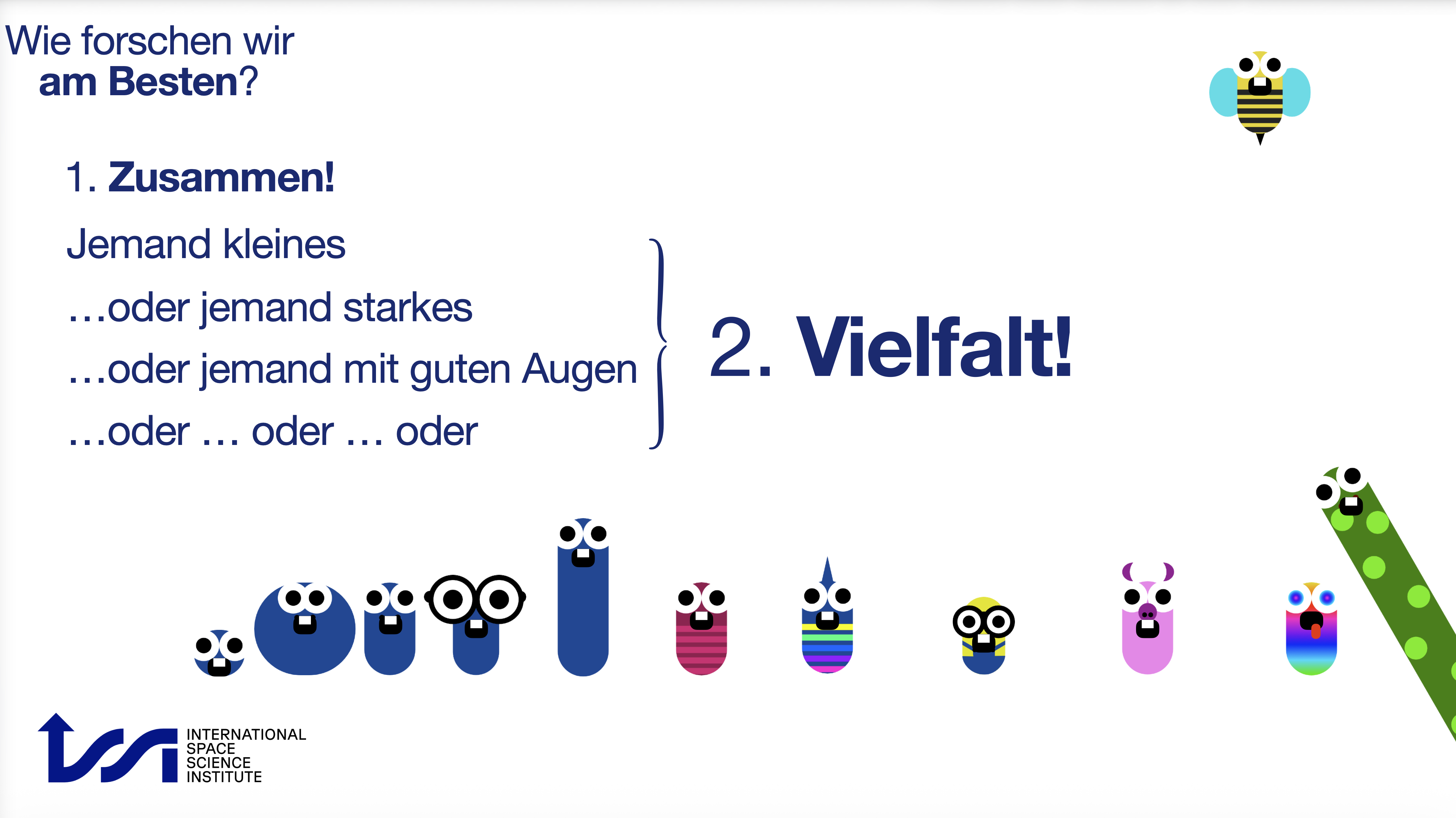
“Fabio showed us on the Beamer [Swiss-German word for projector!] how astronauts can use help and he did that with funny worms.”
Astronauts are familiar figures and often the first thing people associate with space science: a useful bridge (or yes, a hook!) to broader scientific concepts.
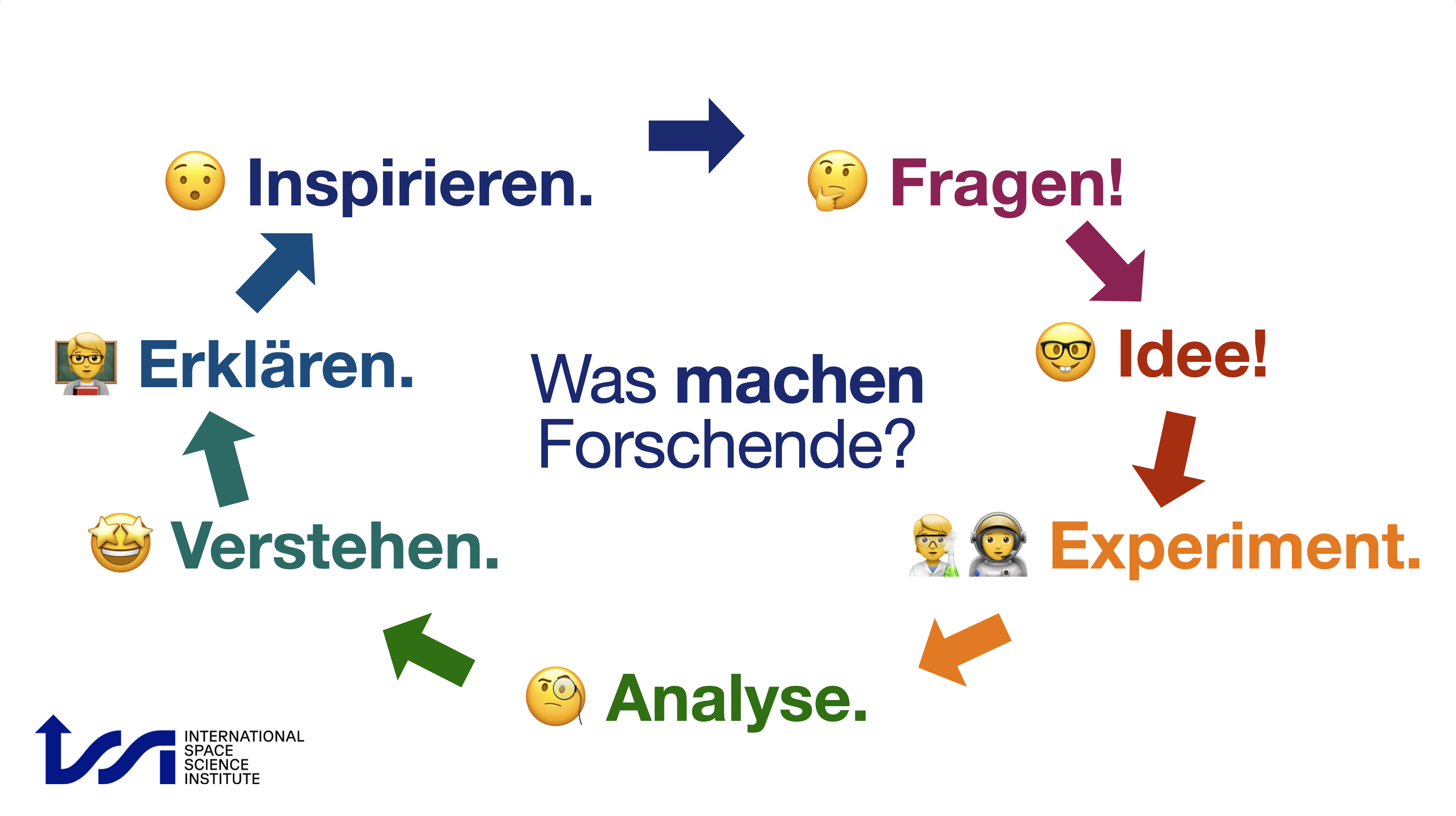
“If you do research, one needs multiple people.”
Message received: You can work alone (of course standing on the shoulders of others) — but you definitely go farther together.
“We received a cup in which there was a sticker, a key holder, and a note with my name.”
Small giveaways act as effective, recurring reminders of what was learned.
“It was so cool there that I would like to go there again.”
“It was a real pleasure, it was brilliant!!!”
“A 10 out of 10.”
Entertaining science communication matters — but it also requires time, effort, recognition, and support.